
Whoa! That market move felt sudden. I remember opening my wallet one morning and seeing a trade I didn’t expect. My instinct said something felt off about the floor price change. Initially I thought it was a bot sweep, but then I dug in and found a cluster of tiny transfers that told a different story—so yeah, somethin’ in the logs often gives you the real narrative.
Really? Yup. Short lived price spikes often hide manual manipulation or coordinated bids. On one hand the charts scream volatility. On the other hand the transaction graph quietly reveals who moved what, when, and for how much, and that actually matters for collectors and builders alike. I like to say: charts tell moods, explorers tell motives.
Wow! Tracking NFTs on Solana is fast, but that speed can be deceptive. Solana’s throughput masks complexity. Transactions confirm in milliseconds, yet the meaning of a transfer can take much longer to parse—because metadata, creators’ signatures, and wallet clusters all play into provenance. My first read was naive; then I learned to follow the breadcrumbs.
Why a blockchain explorer matters more than you think
Seriously? People still ask whether explorers are necessary. Sure they are. An explorer is your forensic lens. Without it, you’re just guessing—like watching a game with one eye closed. I get why collectors prefer glossy marketplaces; they look simple. But if you want to verify authenticity, check royalties, or spot wash trading, you need on-chain evidence.
Okay, so check this out—blockchain explorers provide raw transaction history, token mint details, and program interactions that marketplaces often abstract away. Initially I thought marketplace metadata was enough for proof, but after a few bad drops I realized you need the immutably recorded state on-chain. Actually, wait—let me rephrase that: marketplace metadata is useful, but it should be verified against on-chain records before you act.
Hmm… My bias is obvious: I’m biased, but I trust explorers more than marketing blurbs. There’s comfort in a timestamped ledger. On the technical side, Solana explorers decode Program Derived Addresses (PDAs), show inner instructions, and reveal which program executed a swap or transfer—information that matters when you audit a collection or check if a “verified” badge corresponds to a legitimate creator key.
Whoa! The other reason explorers matter is speed. When a drop is announced, bots and snipers move. If you can see mempool behavior and recent signatures, you can infer strategies and adapt. I’m not advocating front-running; I’m saying awareness reduces surprises. On Main Street or in Silicon Valley, being informed changes outcomes.
Solana-specific quirks that trip people up
Really? Yes—Solana’s parallel execution model gives the network high throughput, but that architecture creates patterns you won’t see on other chains. Transactions can be processed out-of-order in ways that confuse naive onlookers. One transfer might appear before another in a block even though it logically happened after—so reading the logs requires context, not just timestamps.
At first glance this felt like a bug. Then it made sense: concurrency is a feature, not a flaw, and explorers that surface inner instructions and account deltas help you reconstruct the true sequence. On the other hand, not every explorer shows those inner steps, so sometimes you miss critical evidence. That’s when I open a low-level trace and start connecting the dots.
Wow! Also, metadata standards on Solana are varied. There are creators’ signatures in update authorities, on-chain JSON pointers, off-chain CDNs, and then the dreaded broken link to an image. If the metadata is off-chain, the token can still be valid, but its presentation might be lost if the host disappears—so check both on-chain mint records and the URI.
Something bugs me about lazy minting workflows. They create plausible deniability in the metadata chain. I saw a “verified” tag once where the mint authority changed hands the day after minting. That should’ve been a red flag. I’m not 100% sure how common this is, but I’ve seen it enough times to be cautious.
How to use an explorer to verify an NFT step-by-step
Whoa! Start with the mint address. Short and simple. Copy the token mint and paste it into the explorer search bar. You’ll find the original mint transaction, which shows the mint authority, the initial owner, and creation timestamp. Those are your anchors—if something about the authority or creation looks off, dig deeper.
First, check the metadata URI listed on the token account. If it’s IPFS, that’s a good sign, though not a guarantee. If it’s a random HTTP link, be wary. Then look at the creator array. Legit collections usually list the creator with a verified signature and a consistent percentage for royalties. If that array is missing or contains multiple unknown addresses, that’s a signal to pause.
Actually, wait—let me rephrase: a missing creator array isn’t always malicious. Some legacy mints predate the modern standards. But in new drops it’s unusual. On one hand you might find legitimate variation due to older tooling. On the other hand new projects copying market conventions but leaving metadata holes is suspicious. So context matters.
Finally, inspect the transaction history for wash trading patterns—lots of back-and-forth sales between clustered wallets at similar prices. Those repeats suggest price inflation. If a high-profile sale shows many small transfers before a big sale, it could be an attempt to create perceived liquidity. My gut flags those patterns immediately.
Tools and features to look for in an NFT tracker
Wow! Look for token history with inner instruction decoding. That gives you the program-level actions. Also get creator verification badges mapped to on-chain keys. A good tracker will show token holders, delegate keys, recent transfers, and any marketplace listings that reference the token.
Hmm… I prefer explorers that let me filter by program ID, by wallet cluster, and by transaction size. Initially I used a basic viewer, but then I migrated to tools that provide address clustering and visualization. Those visuals often reveal coordinated behavior faster than raw rows of data. Also, exportable CSVs help when you want to run offline analysis.
I’m biased toward hands-on inspection. That means I like being able to view inner instructions, download receipts, and follow the signature back to the signer. If you can match a trade to a public identity or a known bot, that changes how you value the sale. Honestly, that part of the work feels a little like detective work and very rewarding.
Wow! One more feature: alerts. Set address watches for creators or for your own mints. Alerts on transfer activity or authority changes keep you from being surprised. They don’t stop bad things, but they buy you time to respond.
Where solscan fits into this workflow
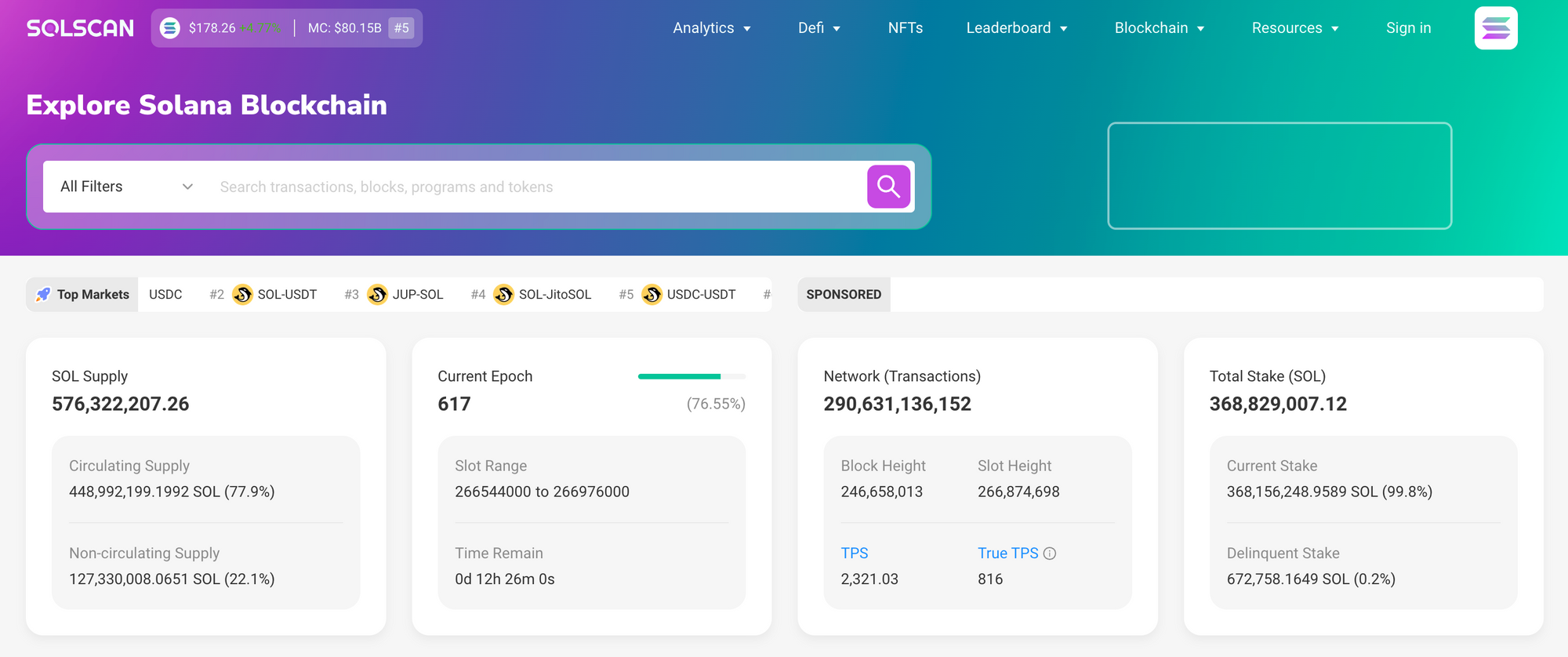
Hey—if you’re digging into Solana NFTs, you’ll likely use solscan at some point. It’s comprehensive and fast. Initially I thought it was just another block reader, but then I started relying on its token pages and transaction decoders for rapid verification.
On one occasion a collection’s floor officially spiked and then tumbled; solscan’s traces showed a single wallet sequence moving pieces around right before the spike. That line of evidence changed my decision to sell. So yeah, tooling influences outcomes. Take your tools seriously.
I’m not saying solscan alone is enough. Use it with marketplaces and other trackers for corroboration. But when you need a quick, reliable look at mint authorities, inner instructions, or holder distributions, it’s one of the fastest paths to clarity. I’m not 100% sure it catches every obfuscation, but it catches a lot.
Frequently asked questions
How do I confirm an NFT’s creator on Solana?
Check the token’s mint record and the creator array in the metadata. Look for a verified creator key in the token metadata and compare the mint authority to the creator address. If the explorer shows a recent update authority change, verify who signed it. If anything looks inconsistent, ask the project or check multiple explorers before trusting big transactions.
Can I detect wash trading on-chain?
Yes, to a degree. Look for frequent low-value transfers between a small cluster of wallets, repetitive price patterns, and circular sales where the token returns to previous owners. Address clustering and visualization tools amplify these signals. None of this is perfect, but combined evidence builds a strong case.
What should I do if metadata points to a broken image?
Pause. If the metadata URI is off-chain, try retrieving the JSON manually and check for an IPFS CID. If the content is gone, contact the project’s team and search archives. For high-value pieces, consider forensic snapshots of the metadata and document everything before trading.